The Inaugural Ultra-SLP Conference

July 15-July 17, 2026 – Cincinnati, Ohio, USA

About the conference

The Ultra-SLP: Evidence and Practice in Ultrasound Biofeedback Therapy conference is a two-day conference for SLPs about using ultrasound in speech and swallowing practice. UltraSLP draws on the substantial ultrasound clinical and research presence of the University of Cincinnati and collaborative host, Cincinnati Children’s Hospital, to invite dialogue from clinicians and researchers from around the country, representative of different regions, populations, and clinical practice types. For ultrasound beginners, the conference will start with a training workshop before moving on to presentations about current best practices for using ultrasound with different clients and disorders. As an Implementation-Science (IS) conference, UltraSLP promotes researcher-clinician partnerships by (1) including round-table sessions for clinician-researcher discussions, and (2) connecting attendees with post-conference mentorship.

Conference Timeline

January 3, 2026: Registration opens
February 3, 2026: Travel scholarship submissions open
March 3, 2026: Travel scholarship submissions close
April 3, 2026: Notification of travel scholarship recipients
April 3, 2026: Early registration ends
July 3, 2026: Late registration ends
July 15-17, 2026: Ultra-SLP conference

Please note that the Travel Scholarship has been placed on hold. 

Registration

Ultra-SLP is an in-person conference, with all scheduled talks taking place at the 1819 Innovation Hub at the University of Cincinnati’s campus. All events are All events are sequential, but attendees are free to choose which events to attend. Registration opens January 3, 2026, and is available until July 3, 2026, or until the conference venue reaches capacity. Registration fees help to cover the provided lunches, coffee breaks, and conference materials for all attendees. Questions regarding registration should be directed to the Ultra-SLP conference director (Sarah Dugan, hamilsm@ucmail.uc.edu).

Registration fee: $100

Conference Schedule

July 15th programming
Time Session  Location
5:00 PM  Opening reception with remarks from the keynote speaker HSB

Keynote Address/Opening Reception: “Tracing Ultrasound’s Path in Speech Sound Intervention” 

5:00-6:00 PM 

Presenter: Elaine R. Hitchcock, Ph.D. CCC-SLP, 

Ultrasound imaging has transformed from an experimental research tool into a practical, evidence-informed option for treating speech sound disorders across the lifespan. This keynote will trace the historical arc of ultrasound for speech, beginning with early work visualizing tongue shape and movement, to its integration into clinical protocols for children with residual /ɹ/ errors, velar fronting, lingual fricative distortions, and childhood apraxia of speech. Early studies established feasibility and demonstrated that real-time tongue visualization could augment traditional articulatory cues, particularly for children and adults whose errors persisted despite high-quality therapy. Over time, systematic reviews and single-case experimental studies have clarified when and for whom ultrasound visual biofeedback is most effective, while also highlighting challenges in generalization and access. Drawing on decades of research and clinical implementation, this presentation will review and synthesize key milestones, outcome data, and practical lessons, and address how contemporary biofeedback protocols can be realistically adapted for busy clinical settings, including considerations for equipment, training, and candidacy. 

July 16 programming 
Time Session Location
8:00 AM Conference Opening Address  1819 Innovation Hub
9:00 AM Ultrasound training workshop 1819 Innovation Hub
12:00 PM Lunch 1819 Innovation Hub
1:00 PM Presentation: Hearing Accuracy, Seeing Change: Ultrasound Guided Shaping of Residual Speech Sound Challenges 1819 Innovation Hub
2:00 PM Presentation: Treating Apraxia with Ultrasound 1819 Innovation Hub
3:00 PM  Panel: Investing in Innovation: Funding Ultrasound Technology to Advance SLP Training and Clinical Outcomes 1819 Innovation Hub
3:30 - 4:30 PM  Using implementation science to create meaningful research-practice partnerships 1819 Innovation Hub
4:30 - 5:30 PM Ultrasound Visual Biofeedback for Pediatric Speech Sound Disorders: Practical Clinical Strategies 1819 Innovation Hub

Conference Opening Address: “Articulatory Phonetics in the Age of Tongue Visualization.” 

8:00-9:00 AM

Presenter: Suzanne Boyce, PhD CCC-SLP, CAGS

The typical phonetics education provided to speech-language pathologists covers definitions of phonetic categories (place, manner, stop, labial, etc.), International Phonetic Association (IPA) symbols, and skill at transcription. Speech sounds are described in an isolated form.  This educational base is essential for clinicians to perform competently with the standard repertoire of treatments for speech sound disorders in children and adults, but it also reflects the limitations of the technology available in the workplace. The advent of visualization technologies, such as ultrasound and magnetic resonance imaging, has made it possible to develop new forms of treatment, but it has also highlighted the need for a broader understanding of articulatory movement in speech. In this talk, I will touch on the history of phonetic knowledge about articulation in our field, with a focus on how visualization technologies have expanded our knowledge of the most problematic and least well understood speech sound, American English /r/. 

Ultrasound training workshop

9:00 AM - 12:00 PM 

Presenters: Sarah Dugan PhD, CCC-SLP and Megan C. Leece, MA, CCC-SLP 

Experienced ultrasound clinicians Megan Leece and Sarah Dugan will lead a hands-on training workshop for SLPs who want to learn to use ultrasound to treat Speech Sound Disorders, including Childhood Apraxia of Speech. Information about using and interpreting the ultrasound, formulating goals and therapy plans, typical progression of sessions, speech sounds that can be treated with ultrasound, and client characteristics will be shared. Ultrasound machines will be on hand to practice. 

Hearing Accuracy, Seeing Change: Ultrasound Guided Shaping of Residual Speech Sound Challenges

1:00-2:00 PM

Presenter: Elaine Hitchcock, PhD, CCC-SLP

Ultrasound visual biofeedback reveals that there is no single “correct” tongue shape for /ɹ/; instead, speakers use a range of individual, but acoustically valid, configurations. For clinicians, this diversity underscores the importance of listening first, using perceptual judgments to determine when a production truly matches the target sound, while using ultrasound as a flexible visual guide rather than a rigid template. In this presentation, we will demonstrate how real-time tongue imaging can help clinicians analyze a client’s habitual error pattern, identify viable alternative tongue shapes, and then shape a distorted or inaccurate production toward a perceptually accurate /ɹ/. Case examples will show how perceptual accuracy and ultrasound-guided tongue shaping work together: the clinician listens for acceptable resonance and clarity while using ultrasound to cue adjustments in constriction location, tongue root retraction, and bracing. Clinical strategies for fading visual support and promoting generalization beyond the ultrasound context will also be discussed.

Treating Apraxia with Ultrasound

2:00-3:00 PM

Presenter: Dr. Jonathan, CCC-SLP

Childhood apraxia is a subtype of speech sound disorder that involves impaired planning and programming of speech movements. This presentation will describe principles of treatment related to this population, including strategies to enhance the acquisition of movements as well as generalization. Special considerations CAS will be reviewed, including target selection and the role of prosody. Video examples from clinical research studies will be shown to demonstrate the implementation of ultrasound in speech therapy for school-aged children with apraxia of speech.

Panel: Investing in Innovation: Funding Ultrasound Technology to Advance SLP Training and Clinical Outcomes

3:00-3:30 PM

Presenters: Jianwen Crump, Ed.D., CCC-SLP; Kori Clements SLP.D., CCC-SLP; and Mary Huston, PhD CCC-SLP

As ultrasound visual biofeedback becomes an increasingly valuable tool in speech-language pathology, sustainable funding models are essential. This panel will address how programs and practices can strategically invest in ultrasound technology through grants, institutional support, vendor partnerships, sustainability planning and inter-professional collaborations. Discussion will emphasize workforce preparation, clinical simulation, and outcome-driven justification for technology adoption. Attendees will leave with a clearer understanding of how to position ultrasound funding as a long-term investment in innovation, education, and patient care.

Using implementation science to create meaningful research-practice partnerships.

3:30-4:30 PM

Presenter: Kelly Farquharson, PhD, CCC-SLP, F-ASHA

In this recorded session, Dr. Farquharson will discuss ways in which she has used implementation science methodologies to bridge clinical practice and research through partnering with speech-language pathologists in school-based settings. This will include reviews of survey-based studies, the experience sampling method, the process of scaling up to a larger exploratory study, and thoughts on what might come next. The primary focus will be on SLPs who work with elementary-aged children (K-3) who have speech, language, or literacy deficits. 

Ultrasound Visual Biofeedback for Pediatric Speech Sound Disorders: Practical Clinical Strategies

4:30-5:30 AM

Presenter: Suzanne Boyce, PhD CCC-SLP, CAGS

Presenter: Dr. Jennifer Moore EdD, CCC-SLP; Dr. Aravind Namasivayam PhD., S-LP(C), Reg. CASLPO

Ultrasound visual biofeedback is beneficial for the assessment and treatment of speech sound disorders, yet many clinicians lack practical training in motor-focused practice and feedback. This clinical workshop teaches hands-on skills to implement ultrasound efficiently in therapy for targeting common speech sound errors. Participants will learn to (1) deliver feedback that combines knowledge of performance and results within motor learning informed practice schedules, and (2) embed engaging and motivating on-screen activities. Video-based case demonstrations and guided practice will show how to choose facilitative contexts, mark visual targets, and fade cues to promote self-monitoring and generalization. Attendees will leave with practical knowledge for integrating ultrasound into SSD sessions.

July 17 programming
Time Session Location
9:00 AM Presentation: Ultrasound in Schools 1819 Innovation Hub
10:00 AM Coffee break  1819 Innovation Hub
10:15 AM Panel: Training students and supervising with ultrasound 1819 Innovation Hub
11:00 AM Presentation: Speech motor skills in early and late /r/ learners 1819 Innovation Hub
12:00 PM Lunch 1819 Innovation Hub
1:00 PM Presentation: Frontiers in ultrasound: Ultrasound for Swallowing: Emerging Evidence, Biomechanics, and Clinical Translation 1819 Innovation Hub
1:30 PM Presentation: Frontiers in ultrasound: Integrating Ultrasound Tongue Imaging into Clinical Practice in Individuals with Cleft Palate ± Cleft Lip  
2:00 PM Presentation: Frontiers in ultrasound: How to Roll your “R”  
2:30 PM Presentation: Ultrasound for speech sound treatment in a large, multi-location pediatric outpatient practice  
3:00 PM Presentation: Guidelines for Interpreting Tongue Shapes  
3:30 PM Breakout session 1: Explore ultrasound technology with colleagues and ultrasound sales representatives in the exhibit space 1819 Innovation Hub
4:30 PM Breakout session 2: Round-table discussion 1819 Innovation Hub

Ultrasound in Schools

9:00 - 10:00 AM

Presenter: Kori Clements SLP.D., CCC-SLP, and Elizabeth Farmer MS CCC-SLP

We will be presenting on our experiences of using ultrasound in schools during speech therapy.  We plan to share our perspectives as some of the earliest adopters of using this technology to work on speech sound disorders in the schools.  Our experience has focused primarily on using ultrasound biofeedback technology to work on the /r/ sound. We will talk about our personal experiences using ultrasound in schools, including advocating for ultrasound, and discuss possible pros/cons/barriers to ultrasound implementation in schools. 

Panel: Training students and supervising with ultrasound

10:15-11:00 AM

Presenter: Karen Brackenbury, M.A. CCC-SLP, Dr. Jianwen Crump, Ed.D., CCC-SLP, Stacey Gerding, M. S. CCC-SLP, and Nadine Ocock Whiteman, MA, CCC-SLP

This presentation will discuss graduate student education of the knowledge and application of ultrasound biofeedback for the /r/ phoneme. Utilizing published research and clinical experience, the emphasis will be on guiding students to recognize and move away from ineffective, traditional instructional methods in favor of evidence-based approaches.

Speech motor skills in early and late /r/ learners 

11:00 AM - 12:00 PM

Presenter: Caroline Spencer, Ph.D

Approximately 75% of neurotypical children learn the /r/sound by age 4 years old, but others do not learn the sound until 6-7 years of age. Clinically, intervention for /r// errors may not start until age 7 or later. So, is there a way to differentiate the early learners from the late learners? In this presentation, I will characterize these two groups of /r/ learners according to common speech and language tests, as well as ultrasound data. I will also discuss how these results fit within guidelines for therapy related to speech motor learning and speech development in the preschool and early school-age years.

Frontiers in ultrasound: Ultrasound for Swallowing: Emerging Evidence, Biomechanics, and Clinical Translation

1:00 - 1:30 PM

Presenter: Brittany N Krekeler, PhD, CCC-SLP, and Anna Hopkins, M.S. CCC-SLP

Ultrasound is rapidly emerging as a transformative tool for assessing swallowing function, offering real-time visualization of structures and biomechanics that are otherwise difficult to capture at the bedside. This presentation will highlight recent innovations in ultrasound-based evaluation of swallowing, including static and dynamic imaging of key structures such as the geniohyoid, mylohyoid, tongue, and hyoid bone. Evidence will be presented on the use of ultrasound to quantify muscle morphology, identify pathophysiologic mechanisms of dysphagia, and measure displacement, timing, and coordination of biomechanical events during the swallow. Applications for biofeedback, screening, and monitoring therapeutic progress will also be discussed. The session will outline technical considerations, reliability challenges, and ongoing research aimed at standardizing protocols for clinical translation. Attendees will leave with an updated understanding of the potential for ultrasound to expand dysphagia assessment and enhance patient-centered care in both inpatient and outpatient settings.

Frontiers in ultrasound: Integrating Ultrasound Tongue Imaging into Clinical Practice in Individuals with Cleft Palate ± Cleft Lip

1:30 - 2:00 PM

Presenter: Hedieh Hashemi Hosseinabad, PhD, CCC-SLP

This talk focuses on the clinical application of ultrasound tongue imaging in assessing speech sound disorders in children with cleft palate. It reviews current evidence supporting the use of ultrasound as an instrumental tool for visualizing tongue shape and movement patterns that are not easily captured through perceptual assessment alone. Emphasis is placed on how tongue imaging can enhance clinicians’ understanding of atypical articulatory strategies commonly observed in children with cleft palate, including persistent compensatory and maladaptive speech errors. The presentation also offers practical, clinically feasible approaches for integrating ultrasound biofeedback into speech motor therapy. Specific examples illustrate how real-time visual feedback can support motor learning by increasing articulatory awareness, facilitating accurate tongue placement, and promoting more efficient speech movement patterns. By bridging research findings with clinical practice, this talk highlights how ultrasound biofeedback can serve as a valuable adjunct to traditional interventions.

Frontiers in ultrasound: How to Roll your “R”

2:00 - 2:30 PM

Presenter: Ahmed Rivera Campos, PhD CCC-SLP

The trill /r/, similar to the English rhotic approximant, is considered a late-developing sound for children who speak Spanish. In order to accurately produce it, speakers of Spanish do not just “raise the tongue tip and push the air out”, a precise tongue configuration and intraoral pressure must occur. By using ultrasound imaging, clinicians can monitor the appropriate positioning of the various tongue sections (e.g., tongue root, tongue blade) in order to support /r/ acquisition in Spanish-speaking children with /r/ errors.

Ultrasound for speech sound treatment in a large, multi-location pediatric outpatient practice

2:30 - 3:00 PM

Presenter: Jennifer Vannest, PhD, MA, CCC-SLP, and Peter Wagreich, MA, CCC-SLP

This talk will detail procedures for implementing ultrasound for speech sound treatment in a pediatric outpatient setting where care is coordinated across several SLPs in multiple locations.  We will review our referral process, episodic scheduling model, clinician training process, and outcomes. 

Guidelines for Interpreting Tongue Shapes

3:00-3:30 PM

Presenter: Suzanne Boyce, PhD CCC-SLP, CAGS

Ultrasound imaging is a portable and inexpensive way to view much of the tongue surface from root to tip, but ultrasound images have limitations and can be difficult to interpret. This talk will describe the basics of how ultrasound images are formed, why image artifacts occur, and guidelines for interpreting tongue shapes despite these limitations. Included topics include tongue tip reflection artifacts, shadowing, and double/ambiguous edges. Examples include results from a study that simulated ultrasound images; by simulating acoustic wave propagation in tissue shapes segmented from MRI, ultrasound images could be simulated from known tongue shapes, and allow for quantitative conclusions.

Venue and Area Information

UltraSLP will be held at the University of Cincinnati’s 1819 Innovation Hub and will offer clinical observation experiences and an evening reception on July 15 at the UC College of Allied Health Sciences Health Sciences Building.

1819 Innovation Hub

1819 Innovation Hub from the outside

The 1819 Innovation Hub is known as the “front door” of the Cincinnati Innovation District, an uptown area that is anchored by both the Main and Medical campuses of UC as well as UC Health and Cincinnati Children’s Hospital. The conference training seminar, as well as all talks and panels, will be held on the second floor, which has a colloquium space that holds 100 people with desks and has state-of-the-art internet access, projection, and audio technology.

Health Sciences Building (HSB)

Health Sciences building from the outside

The UC College of Allied Health Sciences’ Health Sciences Building is located within a mile of the 1819 Innovation Hub, and is accessible on foot, by university shuttle, or by car. An evening reception will be hosted on July 15 at the Health Sciences Building prior to the start of conference presentations on July 16. The Health Sciences Building (HSB) is a four-story, 117,00 square foot building with a large atrium with a skylight that offers natural light and beautiful views of the UC Medical campus and green spaces. The opening reception will be held on the ground floor of this atrium. At the close of July 16’s talks, attendees who have signed up to observe speech therapy with ultrasound will have the opportunity to visit the University of Cincinnati Speech, Language, and Hearing Clinic space in HSB.

Getting to Ultra-SLP

Public Transformation

The University of Cincinnati is served by the Cincinnati Metro bus lines. For more information, please visit UC bus services.

Flights

Cincinnati is served by the Cincinnati/Northern Kentucky Airport.

Biking 

Cincinnati has a RedBike bike share system with a hub near the UC Health Sciences Building (“Kingsgate location”).

Rideshare

Cincinnati, including CVG Airport, is served by rideshare companies like Uber and Lyft.

Shuttle Busses

UC operates shuttle buses to different locations on campus. The Innovation District Shuttle will travel from the main campus hub (“Campus Green”) to the 1819 Innovation Hub conference location. The Northeast Route and COM Connector will travel from the Health Sciences Building to the main campus hub (“Campus Green”). For more details, see Shuttle Services.

Driving to Conference Locations

1819 Innovation Hub

  • Address: 2900 Reading Road, Cincinnati, Ohio 45206
  • Free parking is available for attendees in the “Main Lot” and the “Winslow Lot.”

Health Sciences Building (HSB)

  • Address: 3225 Eden Avenue, Cincinnati, Ohio 45267
  • Free parking is available for attendees in the Eden Parking Garage.

Hotels

There are quite a few options for hotels on and near the University of Cincinnati campus. We have a block of rooms for attendees at the Graduate Hotel, but other hotels are also available for you to reserve.

Hotels Registration Information 
Hotel Walking time from the hotel to the conference locations Driving time from the hotel to the conference locations
The Graduate Hotel by Hilton Cincinnati 1819 IH: 23 minutes HSB: 5 minutes 1819 IH: 5 minutes HSB: 1 minute
Hampton Inn and Suites 1819 IH: 22 minutes HSB: 11 minutes 1819 IH: 6 minutes HSB: 4 minutes 
Fairfield by Marriott Inn & Suites Cincinnati Uptown 1819 IH: 33 minutes HSB: 30 minutes  1819 IH: 6 minutes HSB: 7 minutes
Hotel Celare, Cincinnati Midtown 1819 IH: 38 minutes HSB: 31 minutes 1819 IH: 8 minutes HSB: 6 minutes 

Ultra SLP Inclusion Policy

The Ultra-SLP Conference aims to be an inclusive event for all, regardless of race, gender, sexual orientation, or physical ability. If you have any comments or concerns throughout the symposium, please contact the conference director (hamilsm@ucmail.uc.edu)

Conference Organizing Committee
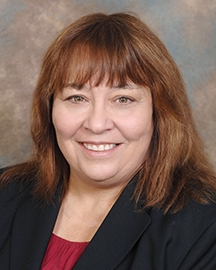
Headshot of Suzanne E. Boyce

Suzanne E. Boyce

Professor , CAHS Communication Sciences & Disorders
513 558 8509

Suzanne Boyce, PhD is a Professor in the Department of Communication Sciences and Disorders and has been in CAHS since 1997. She has a Ph.D. in Linguistics from Yale University and a C. A. G. S. in Speech-Language Pathology from Boston University. She studies the differences in motor control strategies for speech across languages and has published in the Journal of the Acoustical Society of America, the Journal of Phonetics, and Phonetica. Her current work specifically examines the motor control of the tongue for difficult sounds in children with resistant speech sound disorders. She is also interested in problems with difficult sounds in later childhood signal a disordered path in acquiring motor control of the tongue. She believes that articulatory timing information can be extracted from the speech signal and used to guide clinical intervention. Her studies have been funded by the National Institute of Deafness and Other Communication Disorders (NIDCD) and she is currently seeking funding from National Science Foundation. She expects that her future work will test/explore the application of Ultrasound Feedback to Second Language Learning. In 10-20 years, Dr. Boyce most hopes to be known for pioneering ultrasound feedback technology, making phonetic knowledge about tongue motor control relevant for clinical use, and finding clinical use for knowledge about tongue movement timing control. She would also like to leave a teaching legacy of a database for development of laboratory exercises on disordered speech. 
Headshot of Jennifer Jean Vannest

Jennifer Jean Vannest

Professor (F2), CAHS Communication Sciences & Disorders

373 HSB
513-558-8518

Headshot of Claire K Miller

Claire K Miller

Asst Professor - Adj (F9), CAHS Communication Sciences & Disorders

French East
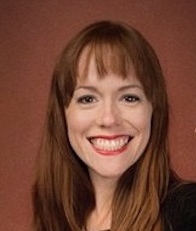
Headshot of Sarah Hamilton Dugan

Sarah Hamilton Dugan

Instructor - Adj, CAHS Communication Sciences & Disorders
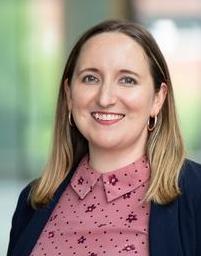
EDWARDS 4 Edwards Center

I am a postdoctoral fellow, a licensed speech-language pathologist, and an early career investigator. I have BAs in English and Linguistics, MA degrees in English, Speech Language Pathology, and Linguistics, and a doctorate in Speech Language Pathology. I am currently in the Psychology department at University of Cincinnati where I am learning methods for investigating motor control from an ecological theory perspective. My clinical fellowship was in the University of Cincinnati Speech, Language, and Hearing Clinic, where I worked mainly with children with residual sound errors using ultrasound for biofeedback. My experimental research has focused on auditory perceptual evaluation and articulatory characteristics of /r/ speech errors. I am closely connected with clinical training, both of students and current SLP professionals. I have given research presentations about ultrasound biofeedback therapy at national conferences and been invited to give talks about our work in seminars, both local and national. Evidence of my commitment to teaching and training can be seen in the two teaching awards given to me by my college during my doctoral degree. I also have a strong dedication to translational clinical research. I won a national award for my clinical research record, given by the Association of Schools of Allied Health Professions, and I have taken coursework to earn a certificate in Clinical and Translational Research from University of Cincinnati’s Center for Clinical and Translational Studies. Most recently as a postdoctoral fellow, I have managed two grants (NIH Translational R01 Grant 1R01DC013668-01, “Improving clinical speech remediation with ultrasound technology,” and the University of Cincinnati Strategic Collaborative Initiative Grant “Improving speech motor performance with simplified visual targets from ultrasound”). For both projects, I have recruited patients, conducted experimental clinical research using ultrasound, successfully trained laboratory personnel, and collaborated with interdisciplinary professionals at multiple sites.
Headshot of Stacey M Gerding

Stacey M Gerding

Assoc Professor - Adj Rep, CAHS Communication Sciences & Disorders

363 HSB

513-558-8582

Stacey is a licensed speech-language pathologist and clinical supervisor for UC's Speech and Hearing Clinic. She provides clinical services related to stuttering / fluency, accent modification, language disorders / delay, social skills intervention, ultrasound biofeedback for /r/, and speech sound disorders across the lifespan. 

Stacey also serves as Assistant Director of Clincial Education.
Headshot of Jianwen Crump, Ed.D., CCC-SLP

Jianwen Crump, Ed.D., CCC-SLP

Assistant Professor of Speech-Language Pathology, Mississippi University for Women.

(662) 329-7276

Headshot of Kelly Farquharson, Ph.D., CCC-SLP

Kelly Farquharson, Ph.D., CCC-SLP

Professor; Director, Children's Literacy and Speech Sound (CLaSS) Lab,Lab, Florida State University.

8506448465

Headshot of Elaine Hitchcock, Ph.D., CCC-SLP

Elaine Hitchcock, Ph.D., CCC-SLP

professor in the Department of Communication Sciences and Disorders, Montclair State University

973-655-7355