Clinical Partnerships & Experiential Learning

Learn Through One of the Region's Largest Health Care Partnership Networks
College of Allied Health Sciences (CAHS) students gain practical experience through a broad network of hospitals, clinics, schools, community agencies, laboratories, rehabilitation centers, and health organizations.
Our location at the center of Cincinnati's thriving medical and health care hub creates unparalleled opportunities for clinical placements, community engagement, and professional connections and mentors.
By the numbers
Partnerships spanning health care, education, community services, public health, and industry
1,097
active clinical affiliation agreements
1,000+
placement locations
34
opportunities in 34 states
Co-op, the CAHS Way
UC is nationally recognized for cooperative education. In the health professions, experiential learning takes a different form. Clinical placements, fieldwork experiences, practicums, and internships provide students with direct patient, client, and community-based experiences while helping them meet professional accreditation and licensure requirements. Our extensive network of clinical partners gives students access to some of the region's and nation's most respected health care organizations.
Preparing Career-Ready Professionals
Clinical and field experiences allow students to:
- Apply classroom learning
- Develop professional skills
- Build confidence
- Network with future employers
- Explore specialties and career pathways


Experiential learning is at the heart of every CAHS program. Our clinical, fieldwork, practicum, and internship experiences allow students to apply what they learn in the classroom while developing the confidence, competence, and professional judgment needed to enter the workforce.
Ramesh Kaipa, PhD Associate Dean, Community Partnerships and Impact
Where students learn
Students gain experience in leading health systems, hospitals, specialty care centers, and rehabilitation settings.
Featured Partners
- Cincinnati Children's Hospital Medical Center
- UC Health
- University of Cincinnati Medical Center
- The Christ Hospital
- TriHealth
- Bon Secours Mercy Health
- Kettering Health
- St. Elizabeth Healthcare
- Nationwide Children's Hospital
- MetroHealth
- Norton Healthcare
- Ohio State University Wexner Medical Center
- Cleveland Clinic
- Bethesda North Hospital
- Good Samaritan Hospital
- West Chester Hospital
- Fort Hamilton Hospital
Through partnerships with nationally recognized health systems and hospitals, students gain hands-on experience alongside practicing clinicians in a variety of care settings.
Students provide services and gain supervised clinical experience through university-operated clinics and programs.
Featured Partners
- UC Speech and Hearing Clinic
- Occupational Therapy Community Clinics
- Pro Bono Physical Therapy Clinics
- Kroger IPE Clinic
Students work directly with nonprofit organizations, community agencies, and local partners to improve health and well-being.
Featured Partners
- Mental Health America
- Brighton Center
- Child Focus
- Down Syndrome Association
- Cancer Support Community
- Love Grows
- Maple Knoll Communities
- Special Olympics
- Head Start
- Bearcats Pantry
Students learn how health professionals address community needs through prevention, outreach, education, advocacy, and support services.
Students gain experience in educational environments supporting children, families, educators, and future health professionals.
Featured Partners
- Head Start Programs
- Cincinnati Public Schools
- Preschool Development Programs
- National Consortium for Health Science Education
- University of Cincinnati College of Education, Criminal Justice, Human Services
- Xavier University
- Cincinnati State Technical and Community College
Educational partnerships provide opportunities to support communication, development, wellness, and learning across the lifespan.
Students develop technical and analytical skills in laboratories, diagnostic centers, and imaging facilities.
Featured Partners
- Cincinnati Children's Laboratory
- UC Medical Center Laboratories
- VA Laboratory
- Cleveland Clinic Laboratories
- Compunet Clinical Laboratories
- Thermo Fisher Scientific
- Werfen
- ProScan Imaging
- Beacon Orthopaedics Imaging
- Christ Hospital Laboratories
Clinical laboratory and diagnostic partners help students gain experience with the technologies and procedures that support modern health care.
Students contribute to initiatives that support population health, public services, and community well-being.
Featured Partners
- Hamilton County Job & Family Services
- City of Springdale Health Department
- Veterans Affairs Health System
- Cincinnati Fire Department
- UC Radiation Safety
- Federal and State Health Agencies (various placement sites)
Public-sector partnerships expose students to the broader systems that influence health, safety, prevention, and community outcomes.
Students engage with organizations advancing innovation, research, data analytics, diagnostics, and health technology.
Featured Partners
- Thermo Fisher Scientific
- Werfen
- Medpace
- Center for Health Informatics
- Maple Knoll Telehealth Research Initiative
- ProScan Imaging
- Health Informatics Practicum Partners
Industry partnerships provide exposure to emerging technologies, research, diagnostics, health informatics, and innovation shaping the future of health care.
Students gain hands-on experience in rehabilitation, recovery, and wellness settings that help individuals improve function, independence, and quality of life throughout the lifespan.
Featured Partners
- Physical therapy practices
- Occupational therapy providers
- Skilled nursing facilities
- Wellness and prevention organizations
Rehabilitation and specialty care partnerships provide students with experience in recovery, mobility, wellness, and long-term care while developing the clinical and interdisciplinary skills needed across the continuum of care.
Students work alongside organizations that support mental health, behavioral health, recovery, family services, and community well-being.
Featured Partners
- Talbert House
- Best Point Education & Behavioral Health
- Greater Cincinnati Behavioral Health Services
- Lindner Center of Hope
- Mental Health America
- Brighton Center
- Child Focus
Behavioral health and human services partnerships help students understand whole-person care while gaining experience supporting the mental, emotional, and social needs of individuals and communities.
Regional and National Reach

Clinical Placements Across the Nation: A U.S. map highlights the national reach of University of Cincinnati College of Allied Health Sciences clinical placements. Students complete hands-on learning experiences at placement sites in 34 states across 12 CAHS programs, with the highest concentration of program-site partnerships in Ohio and additional strong networks in Texas, Florida, California, and along the East Coast. Black dots indicate individual placement locations, illustrating opportunities in health care, education, laboratory, and community settings nationwide.
Meet some of our Clinical Preceptors
Behind every successful clinical experience is a dedicated mentor. Our clinical preceptors partner with the University of Cincinnati College of Allied Health Sciences to provide hands-on learning, professional mentorship, and real-world experiences that prepare students for rewarding careers in health care. Explore their stories and discover the impact they make on our students every day.
Greg Raimondo, MS, AT, CSCS, CIDN
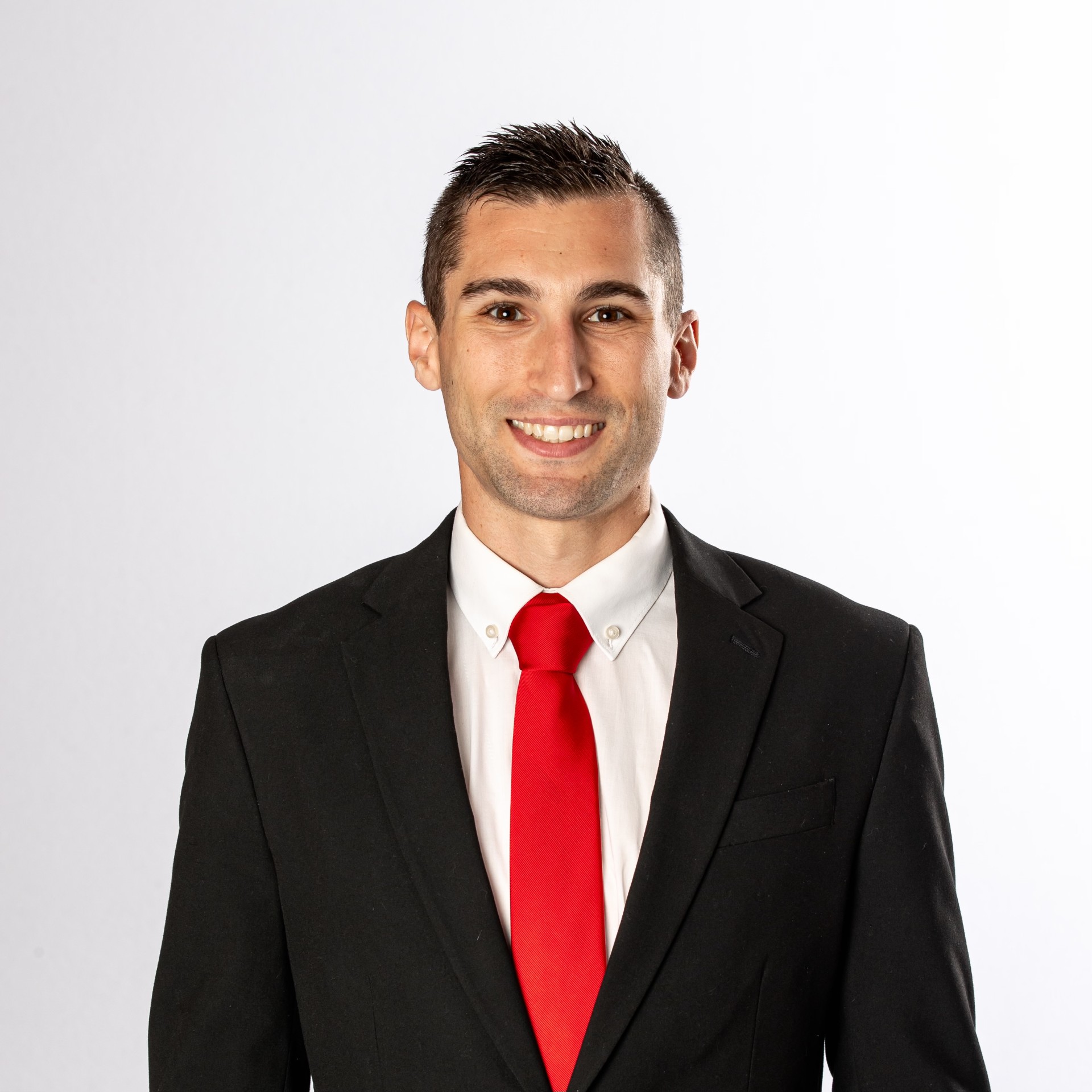
Associate Athletic Trainer | University of Cincinnati Sports Medicine
Clinical Preceptor for the University of Cincinnati Master of Science in Athletic Training Program
For Greg Raimondo, serving as a clinical preceptor is an opportunity to invest in the next generation of athletic trainers while helping students bridge the gap between the classroom and clinical practice.
After earning his undergraduate degree in athletic training from Heidelberg University, Raimondo completed a graduate assistantship at Southeast Missouri State University, followed by an internship at Middle Tennessee State University. He then accepted his first full-time position at Southeastern Louisiana University before joining the University of Cincinnati Sports Medicine team, where he now works with Bearcats football student-athletes.
Inspired to Mentor
Raimondo credits his own clinical preceptors with shaping his career and inspiring him to become a mentor.
Today, he strives to create meaningful learning experiences that help students grow into confident, skilled clinicians who are prepared for the realities of professional practice.
I really enjoyed my preceptors when I was in college and felt that they were very impactful on my education. I wanted to play that role for the next generation of athletic trainers.
Greg Raimondo
Preparing Students for Clinical Practice
Clinical education provides students with opportunities to apply classroom knowledge in real-world settings while building confidence and refining clinical decision-making. Raimondo encourages students to think critically, recognize patterns in patient care, and become comfortable making informed decisions in fast-paced environments.
By the end of each placement, he hopes students leave with increased confidence in their clinical abilities, stronger pattern recognition skills, and improved critical thinking that will serve them throughout their careers.
What Makes UC Students Stand Out
According to Raimondo, University of Cincinnati students consistently arrive well prepared for clinical experiences. They demonstrate a strong foundation in athletic training, communicate professionally, and are eager to ask questions and expand their knowledge.
One experience that stands out occurred during the 2024 football season when a UC athletic training student traveled with the Bearcats to Colorado before beginning an immersive clinical placement there the following spring. The visit gave the student an opportunity to meet future preceptors, become familiar with the environment, and begin building professional relationships before the clinical experience officially began.
The Value of Clinical Partnerships
Hosting students benefits both learners and clinical sites. As students develop hands-on skills while managing their own patient caseloads under supervision, they also become valuable members of the health care team by supporting daily clinical operations.
Raimondo believes successful clinical partnerships are built on a shared commitment to learning, where preceptors are invested in teaching and students arrive motivated to learn and grow. These relationships strengthen the educational experience while helping prepare the future health care workforce.
Advice for Future Students
As students begin their first clinical placement, Raimondo encourages them to embrace every learning opportunity with enthusiasm, maintain open communication, and remember that growth often comes through experience.
He also emphasizes the importance of showing up each day with a positive attitude, a commitment to continuous improvement, and the willingness to learn from every patient encounter.
"Don't be afraid to make mistakes. They are going to happen and oftentimes they will be some of the best lessons to help make you better."
Greg Raimondo
Looking Ahead
Raimondo is excited to see athletic training continue gaining recognition and respect throughout the health care community. He believes the University of Cincinnati's Master of Science in Athletic Training program, combined with its experienced clinical preceptors and strong professional network, provides students with the preparation and connections needed to achieve their career goals.
Through partnerships with dedicated clinical educators like Greg Raimondo, the University of Cincinnati College of Allied Health Sciences continues to provide students with hands-on learning experiences that prepare them to become confident, compassionate, and practice-ready health care professionals.
Aura Lee Elder, Au.D., ABA-Certified, CH-AP, CH-TM

Doctor of Audiology | UCHealth Otolaryngology (ENT),
Clinical Preceptor for the University of Cincinnati Doctor of Audiology Program
For more than a decade, Aura Lee Elder has helped prepare future audiologists by creating clinical experiences that challenge students to think critically, communicate with empathy, and deliver exceptional patient care.
Elder has spent more than 20 years practicing in otolaryngology (ENT), a career path that began during her Doctor of Audiology externship. Drawn to the medical side of audiology and fueled by a lifelong curiosity, she built her expertise in diagnostic and medical audiology before joining UCHealth 10 years ago. Today, she combines her clinical practice with a passion for mentoring the next generation of audiologists as a clinical preceptor for University of Cincinnati students.
Inspired to Mentor
Elder's interest in teaching began while she was a graduate student, when she had opportunities to mentor younger students and experienced firsthand the impact dedicated clinical preceptors can have on professional development.
One of the aspects she enjoys most about serving as a preceptor is the opportunity for continuous learning. She values the exchange of ideas that occurs when students bring new perspectives, ask thoughtful questions, and challenge established ways of thinking.
Preparing Students for Clinical Practice
Elder believes clinical education is about much more than mastering technical skills. She encourages students to develop diagnostic reasoning, build safe and logical patient care plans, and gain confidence performing the full range of medical audiology procedures.
Just as importantly, she emphasizes qualities that cannot be measured by clinical competencies alone. She hopes every student leaves their placement with stronger empathy, curiosity, resilience, and the confidence to approach each patient with compassion and professionalism.
What Makes UC Students Stand Out
According to Elder, University of Cincinnati students distinguish themselves through their engagement in the clinical environment. They arrive prepared to listen, treat patients and colleagues with respect, and contribute thoughtful ideas that enhance patient care and clinical discussions.
One of the most rewarding moments for Elder is watching the relationship between preceptor and student evolve over time. Observing when the relationship evolves from teacher-student to professional colleagues.
She views that transition as a meaningful milestone that reflects both the student's professional growth and the strength of the clinical education experience.
The Value of Clinical Partnerships
Clinical education is a mutually beneficial partnership. While students gain invaluable hands-on experience, clinical teams also benefit from fresh perspectives, current research, and new approaches to problem-solving.
Elder believes successful partnerships are built on shared goals, open communication, trust, and mutual respect. These relationships create supportive learning environments that strengthen both student education and patient care.
Advice for Future Students
As students begin their first clinical placement, Elder encourages them to stay curious and embrace every opportunity to learn.
She also emphasizes the importance of resilience, empathy, and building trust with patients and colleagues. These qualities, combined with a commitment to lifelong learning, help students succeed in any clinical environment.
Ask questions: of your preceptor and of yourself daily.
Aura Lee Elder
Looking Ahead
Elder is excited about the future of audiology as advances in technology continue to reshape the profession. She sees tremendous potential in personalized and preventive health care, along with innovations such as gene and stem cell therapies, hearing and vestibular implants, tinnitus therapeutics, and increasingly sophisticated diagnostic tools.
She encourages students to take advantage of every learning opportunity throughout their education, recognizing that audiology offers a wide variety of career paths and practice settings.
As Elder reflects, audiology is a profession where science, technology, and compassionate patient care come together to make a meaningful difference in people's lives. Through dedicated clinical preceptors like Aura Lee Elder, University of Cincinnati students gain the knowledge, confidence, and mentorship needed to become the next generation of exceptional audiologists.
Elizabeth Gearin, MS, RDN

Inpatient and Specialty Dietitian Supervisor | Cincinnati VA Medical Center
Clinical Preceptor for the University of Cincinnati Nutrition Sciences Program
For Elizabeth Gearin, clinical education is about helping students discover how nutrition science translates into compassionate, patient-centered care. As an inpatient and specialty dietitian supervisor at the Cincinnati VA Medical Center, she is passionate about preparing future registered dietitian nutritionists to think critically, communicate effectively, and make a meaningful impact on the lives of their patients.
Gearin earned her Bachelor of Science in Nutrition (Dietetics) from the University of Dayton before completing her clinical training at the Louis Stokes Cleveland VA Medical Center and earning her master's degree through the coordinated program at Case Western Reserve University. After beginning her career in long-term care and later working in outpatient primary care at the Northern Indiana VA, she joined the Cincinnati VA Medical Center in 2017 as an inpatient dietitian. Today, she leads the inpatient and specialty nutrition team, combining her passion for clinical care with a commitment to mentoring future nutrition professionals.
Inspired to Mentor
Although serving as a clinical preceptor was initially part of her role, Gearin quickly discovered that teaching benefits everyone involved.
She credits her own clinical preceptors at the Cleveland VA with providing an exceptional learning experience and is committed to paying that mentorship forward. Working with students also challenges her to continuously strengthen her own clinical knowledge while staying current with emerging evidence and best practices.
One of the most rewarding aspects of mentoring is watching students grow from learners into confident professionals. She especially enjoys hearing from former interns after they pass the Registered Dietitian Nutritionist (RDN) exam or begin their careers, knowing she played a small role in their success.
Preparing Students for Clinical Practice
Gearin believes clinical education is where students learn that successful nutrition care extends beyond treating a diagnosis. It requires understanding each patient's unique experiences, values, and goals while working collaboratively with the interdisciplinary health care team.
Throughout each rotation, she encourages students to strengthen their clinical reasoning, improve time management, and develop the confidence to prioritize patient care in a fast-paced inpatient environment. Just as importantly, she hopes they leave with a deep appreciation for professionalism, patient dignity, and the responsibility that comes with being a trusted health care provider.
What Makes UC Students Stand Out
According to Gearin, University of Cincinnati students consistently demonstrate an exceptional work ethic. She has been impressed by their ability to fully engage in demanding clinical rotations while balancing graduate coursework, part-time employment, and other responsibilities.
Their dedication, professionalism, and willingness to learn allow them to make meaningful contributions to the clinical team while gaining valuable real-world experience.
The Value of Clinical Partnerships
Hosting students creates benefits for everyone involved. Patients receive thoughtful, individualized care from students who are eager to learn, while clinical staff are challenged to stay current as students bring fresh perspectives and the latest evidence-based nutrition research into practice.
Students also contribute to quality improvement initiatives and other projects that enhance patient care and strengthen the organization. Many dietitians within the VA health care system nd the University of Cincinnati to open communication, shared goals, and a strong commitment to student success.
Advice for Future Students
As students prepare for their first clinical placement, Gearin encourages them to approach every day with curiosity and initiative. She believes preceptors appreciate thoughtful questions, especially when students have taken the time to work through a problem before seeking guidance.
She also reminds students that some of the most meaningful moments in patient care come from simply listening.
Success in the clinical environment, she explains, also depends on effective communication, reliability, teamwork, and a commitment to lifelong learning.
Know that there is healing power in a listening ear.
Elizabeth Gearin
Looking Ahead
Gearin is excited by the growing recognition of nutrition's role in preventive health care and improving long-term health outcomes. As demand for nutrition expertise continues to expand, she sees tremendous opportunities for registered dietitian nutritionists to make an impact across a wide range of health care settings.
She also encourages students to view every clinical rotation as an opportunity to build their professional future. Clinical internships often serve as extended job interviews, and many VA dietitians began their careers as interns within the VA health care system.
Through dedicated clinical partners like Elizabeth Gearin, University of Cincinnati students gain the hands-on experience, mentorship, and professional confidence needed to become compassionate, evidence-based nutrition professionals.